• Insights

Trusted Digital Identity Is Critical Infrastructure for Global Mobility

November 9, 2026

Country / Territory

  • United StatesUnited States

Related contacts

Photo of Amit Sharma

Amit Sharma

Managing Director

Matawan, United States

Email

[email protected]

T:+1 732 862 5000

Related offices

  • Matawan

Share

  • Twitter
  • Facebook
  • LinkedIn

Share

  • Twitter
  • Facebook
  • LinkedIn

Related contacts

Photo of Amit Sharma

Amit Sharma

Managing Director

Matawan, United States

Email

[email protected]

T:+1 732 862 5000

Related offices

  • Matawan

Share

  • Twitter
  • Facebook
  • LinkedIn

Share

  • Twitter
  • Facebook
  • LinkedIn

Related contacts

Photo of Amit Sharma

Amit Sharma

Managing Director

Matawan, United States

Email

[email protected]

T:+1 732 862 5000

Related offices

  • Matawan

Share

  • Twitter
  • Facebook
  • LinkedIn

Share

  • Twitter
  • Facebook
  • LinkedIn

By: Amit Sharma

As governments, employers and individuals operate across an increasingly connected physical and digital environment, the way people prove who they are is becoming a central question for businesses, policymakers and individuals alike. 

Trusted digital identity would allow individuals to prove who they are and reuse verified information across employers, governments and service providers. For global mobility, this reduces repetitive document collection across recruitment, immigration, right-to-work and onboarding while improving assurance, privacy and individual control. 

This is the first in a series of blogs examining the evolving role of digital identity and what it means for the movement of people, skills and credentials around the world.  

Subsequent blogs will consider how trusted digital identity is developing across jurisdictions, its role in enhancing access to critical services while responding to growing fraud risks and AI-enabled impersonation, and how more portable credentials would positively affect recruitment, talent management, immigration, right-to-work compliance and workforce mobility. 

The Growing Identity Challenge 

Moving to another country for work often means verifying the same information several times. An individual needs to establish their identity with a recruiter, background screening provider, immigration authority, university and employer, with each requesting an identity document such as a passport, set of educational or professional qualifications, proof of address and other qualifying personal information. 

The result can be a fragmented process in which information that has already been verified elsewhere is repeatedly requested, exposed, copied and stored. Each additional copy creates another instance in which personal data needs to be managed and protected. 

Global mobility involves repeated checks of an individual’s identity, credentials and background, often managed separately across multiple systems. More connected approaches to verification would reduce duplication and give individuals greater control over their personal information, while helping organizations manage privacy, security and operational risks. 

The growth and scale of international movement add to the significance of the issue. Airlines carried nearly five billion passengers in 2025, while international tourist arrivals reached 1.52 billion. The International Labour Organization (ILO) has estimated that 167.7 million international migrants were part of the global labor force in 2022, representing 4.7% of workers worldwide.  

Building Trust with Less Repetition 

The limitations of repeated document collection are becoming more significant as interactions move between physical and digital environments. Increasingly, digital form factors of official documents, proofs and identity attributes are being enabled directly on personal devices, streamlining request and verification processes and meeting growing demand for the device-centric experiences that younger generations expect.   

Furthermore, global travel, hospitality and other mobility service providers are also increasingly adopting biometrics and other digitally enabled applications for more customers.  Taken together, these innovations are improving customer experiences while introducing new ways to address security. 

At the same time, the fraud environment is becoming more sophisticated and increasingly scalable, with the growth of “fraud as a service” lowering the barriers to sophisticated identity fraud and enabling techniques such as document forgery, impersonation and deepfakes to be deployed more widely. Entrust's 2025 Identity Fraud Report found that digital document forgeries increased by 244% year on year in 2024 and represented 57% of document fraud identified through its verification systems. Gartner has separately predicted that one in four candidate profiles worldwide could be fake by 2028. 

For employers, the question therefore extends beyond whether a single document is authentic. Organizations increasingly need confidence that identity can be established and re-verified consistently throughout the workforce journey, connecting the individual who applies for a role with the person who interviews, completes background screening and ultimately receives permission to work. 

As artificial intelligence (AI) continues to develop, that challenge only grows. Future blogs in this series will explore the implications of synthetic identities, deepfakes and AI agents increasingly acting on behalf of individuals. 

Reusable Digital Credentials Across Borders 

One emerging approach involves digital credentials that can be issued by an authoritative organization, held by the individual and securely presented when another organization needs to verify particular information. 

Under an issuer-holder-verifier model: 
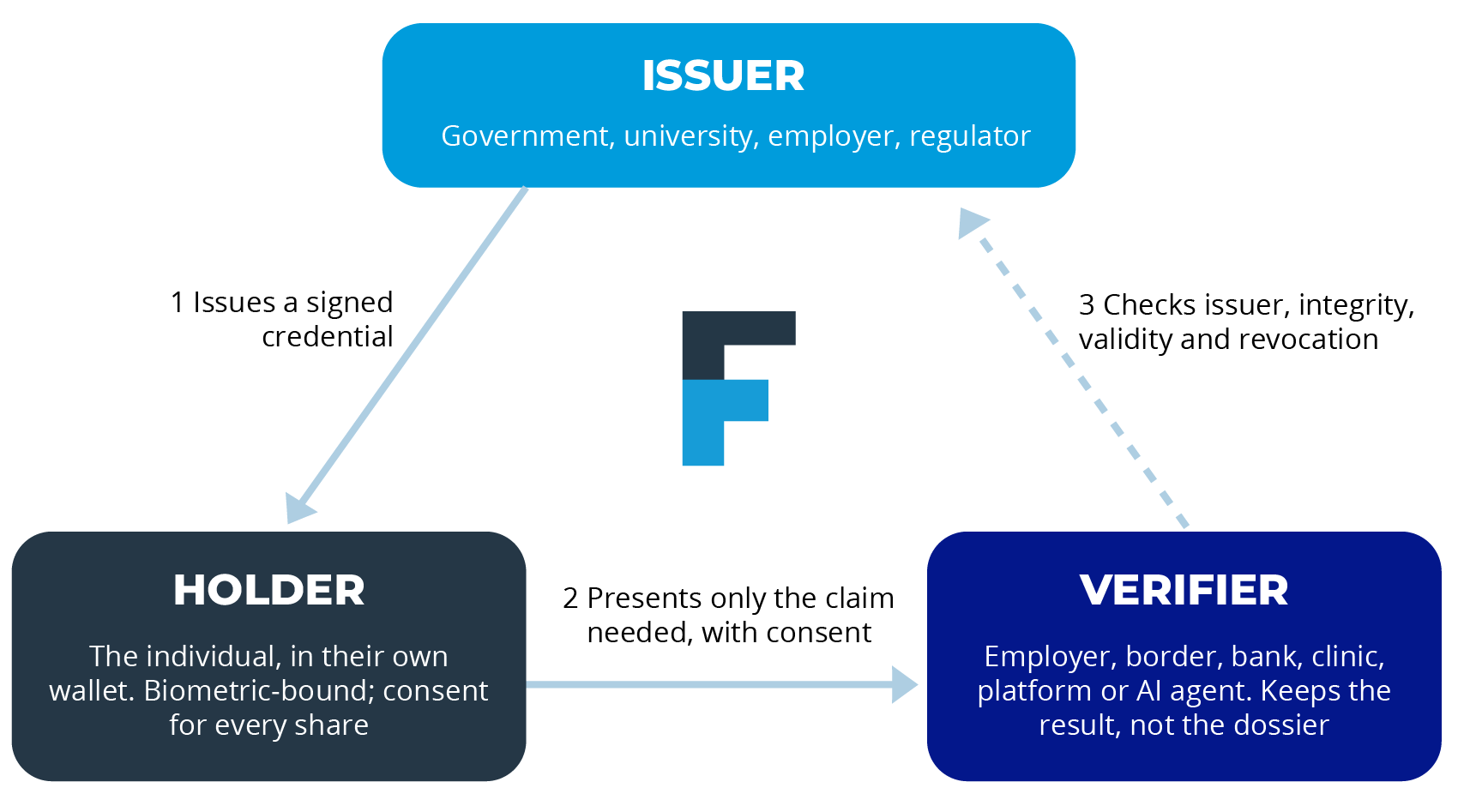
      • Issuer: an authoritative organization issues a trusted digital credential. 
      • Holder: the individual holds and controls that credential. 
      • Verifier: another organization checks the information it needs. 

 A trusted organization, such as a government, university or other recognized institution, can issue a digital credential confirming particular information about an individual. The individual can then hold that credential and present it when an employer, authority or service provider needs to verify the information. 

Instead of relying only on a scanned document, the receiving organization could confirm that the information came from a trusted source, has not been altered and remains valid. 

This would allow individuals to selectively disclose or share only the information needed for a particular purpose. For example, someone could confirm that they have permission to work without sharing other unrelated personal information contained in an identity document. 

Making Digital Identity Work Across Borders 

The importance of interoperability becomes particularly apparent when people move between countries and companies operate under different legal frameworks and technology infrastructures. A digital credential that is accepted by one employer but not recognized by another employer or government authority solves only part of the problem. For digital identity to support global mobility, different systems must be able to work together while respecting local legal and regulatory requirements. 

Governments are developing different approaches to digital identity. The European Union's emerging Digital Identity Wallet framework is one significant initiative, while mobile driving licences in the United States and platforms including UAE PASS, Brazil's gov.br and India's Aadhaar provide other examples. 

These models are not all interchangeable, and their approaches to governance, privacy and assurance can differ. However, credential formats that can both recognize and protect the regulatory regimes in which they operate are increasingly emerging, and digital and device-based applications for consumers and businesses are increasingly adopting verifiable credentials that conform to common global standards such as those governed by NIST. These efforts are increasing interoperability between both private sector organizations and jurisdictional authorities.  Their development raises a common question: how can trusted information about an individual (or organization) be recognized across different systems, sectors and jurisdictions as technology applications, sovereign digital infrastructure and AI applications are being continually innovated? 

What This Could Mean for Employers and Mobility Teams 

For global employers and mobility teams, digital identity is not simply a technology issue. Information relating to personal identity, individual attributes and background credentials continues to move through recruitment, screening, immigration, right-to-work, onboarding and compliance processes. The true global ‘unlock’ will be driven by equally innovative governance and regulatory processes between global governments. 

Proven digital identity technologies provide organizations with opportunities to manage and verify passports, visas, qualifications and other credentials more securely and efficiently. The greater challenge lies in establishing effective governance and interoperability between the different digital identity frameworks developing across jurisdictions. This is where digital identity connects directly with global mobility.  

Identity is rarely established only once for an internationally mobile individual, but forms part of a connected journey that extends from one’s education and recruitment through immigration, work authorization and onboarding to ongoing compliance, relocation and changes in status, and offboarding. Digital identity solutions therefore need to be designed around individuals throughout that lifecycle, enabling credentials to remain current and valid as circumstances change, and to be updated or revoked where and when appropriate. 

Trusted, reusable credentials also reduce much of the friction involved in repeatedly establishing identity, qualifications and work authorization, while providing employers and authorities with greater assurance about the information they receive. Documents and credentials are continually bound to the verified individual, controlled by the holder, and only released with their permission. 

The transition will not happen uniformly. Physical documents and existing verification methods will continue alongside digital approaches in the near and intermediate term, and countries are moving at different speeds. Advanced economies are of course testing and deploying new solutions, but some developed markets are taking a measured or fragmented approach, while many emerging markets are leapfrogging their more developed counterparts and driving national digital identity schemas across multiple industries and use cases. 

Adoption will depend not only on technology, but also on regulation and the development of practical uses that create clear value for individuals, employers and governments.  Building trust takes time, but enabling interoperable and consistent trust by and between jurisdictions globally will take a measured approach. 

Looking Ahead 

As people increasingly work, travel and access services across borders, trusted digital identity has the potential to become an important part of the infrastructure supporting that activity, providing organizations with greater assurance while giving individuals greater control over how their verified information is shared. 

Upcoming blogs will examine how digital identity is taking shape in practice, including cross-border interoperability and adoption, the changing nature of fraud and trust in the age of AI, and the potential for verified credentials to support the secure movement of people, skills and qualifications. 

Need to Know More? 

As digital identity frameworks develop across jurisdictions, employers and mobility teams may need to consider how identity and credential information is collected, verified, shared and retained across the workforce journey. 

To discuss developments in digital identity and their potential implications for immigration, right-to-work compliance and global workforce mobility, please contact Amit Sharma or your Fragomen professional. 

This blog was published on November 9, 2026 and reflects information available at this time. Digital identity frameworks, technologies and regulatory approaches are developing rapidly and may differ between jurisdictions. Organizations should consider the relevant legal, regulatory and operational requirements when assessing how emerging digital identity solutions could apply to their workforce and mobility programs. 

To stay informed on the latest immigration news and analysis, please subscribe to our alerts and follow us on LinkedIn, Facebook and Instagram. 

Country / Territory

  • United StatesUnited States

Related contacts

Photo of Amit Sharma

Amit Sharma

Managing Director

Matawan, United States

Email

[email protected]

T:+1 732 862 5000

Related offices

  • Matawan

Share

  • Twitter
  • Facebook
  • LinkedIn

Share

  • Twitter
  • Facebook
  • LinkedIn

Related contacts

Photo of Amit Sharma

Amit Sharma

Managing Director

Matawan, United States

Email

[email protected]

T:+1 732 862 5000

Related offices

  • Matawan

Share

  • Twitter
  • Facebook
  • LinkedIn

Share

  • Twitter
  • Facebook
  • LinkedIn

Related contacts

Photo of Amit Sharma

Amit Sharma

Managing Director

Matawan, United States

Email

[email protected]

T:+1 732 862 5000

Related offices

  • Matawan

Share

  • Twitter
  • Facebook
  • LinkedIn

Share

  • Twitter
  • Facebook
  • LinkedIn

Explore more at Fragomen

Fragomen news

Comment on DHS proposal to impose up to $100,000 in Optional Practical Training FeesLearn more

Media mentions

Human Resources Director: Fixed-Term Contract Limits Squeeze Visa Sponsorship, Research Warns

Co-authors Partner Charles Johanes, Senior Counsel Anna Boucher and Allens Partner Tarsha Gavin explore the intersection of Australia’s migration and employment laws and the implications for employers sponsoring temporary visa holders.

Learn more

Blog post

UK Global Talent Visa vs Innovator Founder Visa: A Guide for Tech Professionals, Researchers and Founders

Senior Associate Amelia Haynes compares the UK’s Global Talent and Innovator Founder visa routes, examining who each route may suit, the evidence required, professional flexibility and potential pathways to settlement.

Learn more

Blog post

Polish Citizenship by Descent: Finding Family Records and Navigating Polish Archives

Poland Immigration Strategy Director Tomasz Rogala and Senior Associate Tomasz Rdzanek explain how applicants pursuing Polish citizenship by descent can locate family records, navigate archives and obtain documentary evidence that can be used in citizenship proceedings.

Learn more
Generic Insights

Fragomen news

2026年10月 米国移民法ダイジェストLearn more

Awards

Fragomen Recognized in 2027 Best Law Firms® Rankings in the United States

Fragomen has been recognized in the 2027 edition of Best Law Firms®, earning a National Tier 1 ranking in Immigration Law and 16 regional rankings across the United States.

Learn more

Media mentions

Global Underwater Hub: The Specialist Skills Needed to Deliver Future Offshore Projects

Director Kelly Hardman explores how early UK immigration planning and investment in domestic skills can help offshore businesses access the specialist expertise needed to deliver future projects.

Learn more

Media mentions

SHRM: Why ‘Hush Trips’ Can Pose Big Risks for Employers and Workers

Senior Counsel Jo Antoons explains the immigration, social security, insurance, employment law and tax risks that undisclosed international remote work can create for employers.

Learn more

Media mentions

Times of India: Immigration After the Midterms: A New Congress, but Who Holds the Power?

Senior Counsel Mitch Wexler discusses the potential impact of the US midterm elections on immigration policy and the areas where bipartisan support could shape future developments.

Learn more

Blog post

UK Earned Settlement: When Immigration Status Becomes an Incentive for Growth and Compliance

In a new blog, UK Government Affairs Strategy Director Shuyeb Muquit examines what the framework could mean for employers, including potential impacts on sponsorship costs, retention planning, employee communications and support for internationally mobile workers and their families.

Learn more

Blog post

What the 2026 Midterm Election Results Mean for U.S. Business Immigration and Employers

In a new blog, Partner K. Edward Raleigh examines what the election results could mean for employers and where businesses should focus now, from immigration compliance and workforce planning to state response procedures and preparation for increased scrutiny.

Learn more

Media mentions

The PIE: UK to Increase HPI Visa Cap and Expand Eligibility to 150 Universities

Manager Russell Hodges discusses how the HPI visa expansion could help UK employers attract global talent.

Learn more

Fragomen news

Comment on DHS proposal to impose up to $100,000 in Optional Practical Training FeesLearn more

Media mentions

Human Resources Director: Fixed-Term Contract Limits Squeeze Visa Sponsorship, Research Warns

Co-authors Partner Charles Johanes, Senior Counsel Anna Boucher and Allens Partner Tarsha Gavin explore the intersection of Australia’s migration and employment laws and the implications for employers sponsoring temporary visa holders.

Learn more

Blog post

UK Global Talent Visa vs Innovator Founder Visa: A Guide for Tech Professionals, Researchers and Founders

Senior Associate Amelia Haynes compares the UK’s Global Talent and Innovator Founder visa routes, examining who each route may suit, the evidence required, professional flexibility and potential pathways to settlement.

Learn more

Blog post

Polish Citizenship by Descent: Finding Family Records and Navigating Polish Archives

Poland Immigration Strategy Director Tomasz Rogala and Senior Associate Tomasz Rdzanek explain how applicants pursuing Polish citizenship by descent can locate family records, navigate archives and obtain documentary evidence that can be used in citizenship proceedings.

Learn more
Generic Insights

Fragomen news

2026年10月 米国移民法ダイジェストLearn more

Awards

Fragomen Recognized in 2027 Best Law Firms® Rankings in the United States

Fragomen has been recognized in the 2027 edition of Best Law Firms®, earning a National Tier 1 ranking in Immigration Law and 16 regional rankings across the United States.

Learn more

Media mentions

Global Underwater Hub: The Specialist Skills Needed to Deliver Future Offshore Projects

Director Kelly Hardman explores how early UK immigration planning and investment in domestic skills can help offshore businesses access the specialist expertise needed to deliver future projects.

Learn more

Media mentions

SHRM: Why ‘Hush Trips’ Can Pose Big Risks for Employers and Workers

Senior Counsel Jo Antoons explains the immigration, social security, insurance, employment law and tax risks that undisclosed international remote work can create for employers.

Learn more

Media mentions

Times of India: Immigration After the Midterms: A New Congress, but Who Holds the Power?

Senior Counsel Mitch Wexler discusses the potential impact of the US midterm elections on immigration policy and the areas where bipartisan support could shape future developments.

Learn more

Blog post

UK Earned Settlement: When Immigration Status Becomes an Incentive for Growth and Compliance

In a new blog, UK Government Affairs Strategy Director Shuyeb Muquit examines what the framework could mean for employers, including potential impacts on sponsorship costs, retention planning, employee communications and support for internationally mobile workers and their families.

Learn more

Blog post

What the 2026 Midterm Election Results Mean for U.S. Business Immigration and Employers

In a new blog, Partner K. Edward Raleigh examines what the election results could mean for employers and where businesses should focus now, from immigration compliance and workforce planning to state response procedures and preparation for increased scrutiny.

Learn more

Media mentions

The PIE: UK to Increase HPI Visa Cap and Expand Eligibility to 150 Universities

Manager Russell Hodges discusses how the HPI visa expansion could help UK employers attract global talent.

Learn more
Fragomen.com home
Select Language
  • English
  • French
  • French - Canadian
  • German

Select Language

  • English
  • French
  • French - Canadian
  • German
ContactCareersMediaClient Portal
Search Fragomen.com
  • Our Services
    For EmployersFor IndividualsBy IndustryCase Studies
  • Our Tech & Innovation
  • Our People
  • Our Insights
    Worldwide Immigration Trends ReportsMagellan SeriesImmigration AlertsEventsMedia MentionsFragomen NewsBlogsPodcasts & Videos
  • Spotlights
    Travel and Mobility Considerations: Situation in the Middle EastNavigating Immigration Under the Second Trump AdministrationImmigration Matters: Your U.S. Compliance RoadmapCenter for Strategy and Applied InsightsView More
  • About Us
    About FragomenOfficesResponsible Business PracticesFirm GovernanceRecognition

Our Services

  • For Employers
  • For Individuals
  • By Industry
  • Case Studies

Our Tech & Innovation

  • Our Approach

Our People

  • Overview / Directory

Our Insights

  • Worldwide Immigration Trends Reports
  • Magellan Series
  • Immigration Alerts
  • Events
  • Media Mentions
  • Fragomen News
  • Blogs
  • Podcasts & Videos

Spotlights

  • Travel and Mobility Considerations: Situation in the Middle East
  • Navigating Immigration Under the Second Trump Administration
  • Immigration Matters: Your U.S. Compliance Roadmap
  • Center for Strategy and Applied Insights
  • View More

About Us

  • About Fragomen
  • Offices
  • Responsible Business Practices
  • Firm Governance
  • Recognition
Select Language
  • English
  • French
  • French - Canadian
  • German

Select Language

  • English
  • French
  • French - Canadian
  • German
ContactCareersMediaClient Portal
Important Updates
Important Updates
November 9, 2026 | United StatesUnited States: DOL Final Rule on Prevailing Wages Now Under OMB Review
November 9, 2026 | United StatesComment on DHS proposal to impose up to $100,000 in Optional Practical Training Fees
November 9, 2026 | FranceFrance: Wide-ranging Immigration Reforms, Adoption of Certain Revised EU Blue Card and Single Permit Directive Rules
November 9, 2026 | AustraliaHuman Resources Director: Fixed-Term Contract Limits Squeeze Visa Sponsorship, Research Warns
November 9, 2026 | OmanOman: New Residence Permit and Workforce Rules for Investors and Property Owners in Special Economic Zones and Free Zones
November 9, 2026 | United StatesUnited States: DOL Final Rule on Prevailing Wages Now Under OMB Review
Subscribe

Stay in touch

Subscribe to receive our latest immigration alerts

Subscribe

Our firm

  • About
  • Careers
  • Firm Governance
  • Media Inquiries
  • Recognition

Information

  • Attorney Advertising
  • Legal Notices
  • Privacy Policies
  • AI Transparency Statement
  • UK Regulatory Requirements

Our firm

  • About
  • Careers
  • Firm Governance
  • Media Inquiries
  • Recognition

Information

  • Attorney Advertising
  • Legal Notices
  • Privacy Policies
  • AI Transparency Statement
  • UK Regulatory Requirements

Have a question?

Contact Us
  • LinkedIn
  • Youtube
  • Instagram
  • Facebook
  • TikTok
  • Twitter

© 2026 Fragomen, Del Rey, Bernsen & Loewy, LLP, Fragomen Global LLP and affiliates. All Rights Reserved.

Please note that the content made available on this site is not intended for visitors / customers located in the province of Quebec, and the information provided is not applicable to the Quebec market. To access relevant information that applies to the Quebec market, please click here.